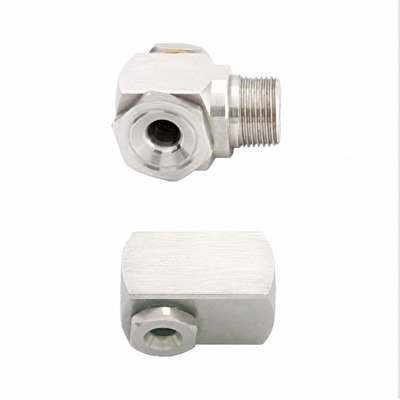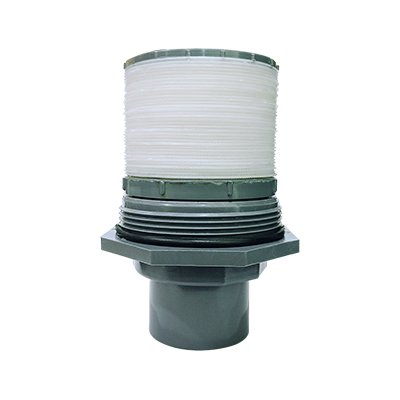

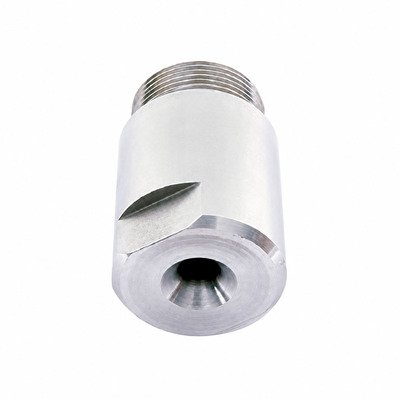
Selecting an industrial spray nozzle begins with the process—not the nozzle catalogue. A nozzle that performs well in one application can produce poor coverage, excessive mist, or premature wear in another. The most reliable approach is to define the operating conditions first, then narrow the available nozzle styles.
1. Define the job the spray must do
Start with a clear process objective. Common duties include washing, rinsing, cooling, coating, dust control, gas scrubbing, humidification, chemical injection, and fire protection. Each duty places different demands on impact, coverage, droplet size, and distribution.
Record the physical space available for the spray, the target dimensions, the distance between nozzle and target, and whether the target or nozzle moves. These details affect the required spray angle and nozzle spacing.
2. Choose the spray pattern
The spray pattern determines how liquid is distributed across the target.
Full cone
A full cone nozzle distributes droplets throughout a circular spray area. It is commonly considered where broad, relatively even coverage is needed, including washing, cooling, and chemical processing applications.
Hollow cone
A hollow cone nozzle concentrates liquid around the outside of a circular pattern. This pattern can be useful when efficient liquid-to-gas contact or an annular spray is required.
Flat fan
A flat fan creates a narrow, line-shaped spray. It is often used for cleaning, rinsing, coating, and manifold arrangements where adjacent patterns overlap.
Solid stream
A solid stream focuses liquid into a concentrated jet. It is suited to applications where high impact at a specific point is more important than broad coverage.
3. Determine the spray angle
Spray angle helps define the theoretical coverage at a given distance. A wider angle can cover more area from the same mounting height, while a narrower angle concentrates the spray over a smaller footprint.
Do not select an angle from geometry alone. Gravity, pressure, air movement, liquid properties, and the nozzle’s actual pattern can change the effective coverage. For multiple nozzles, allow for appropriate overlap and confirm that nearby equipment does not interrupt the spray.
4. Establish the required flow rate
Determine the total liquid flow required by the process and divide it among the number of nozzles in the system. For a manifold, account for nozzle spacing and pattern overlap rather than selecting each nozzle in isolation.
Nozzle capacity changes with pressure. Use the manufacturer’s performance table for the actual liquid and operating pressure instead of assuming that a rated flow at one pressure will remain the same at another.
5. Confirm the real operating pressure
Use the pressure available at the nozzle, not only the pump discharge pressure. Pipe length, fittings, valves, elevation changes, filters, and flow through the system can all create pressure loss.
Pressure can influence capacity, spray angle, impact, and atomization. Increasing pressure is not always the best solution: it may increase misting, energy use, and wear. Select a nozzle that achieves the required result within a stable and practical pressure range.
6. Consider droplet behaviour
Droplet size affects evaporation, drift, surface coverage, heat transfer, and gas contact. Fine droplets provide more surface area but can be more vulnerable to airborne drift. Coarser droplets generally carry momentum farther and may reduce misting.
Droplet behaviour depends on nozzle design, capacity, pressure, liquid properties, and operating conditions. When droplet size is critical, request application-specific performance information or conduct a controlled spray test.
7. Check the liquid properties
Water-based catalogue data may not directly represent a different process liquid. Review:
- viscosity and specific gravity;
- surface tension;
- temperature;
- suspended solids and particle size;
- chemical composition; and
- whether the liquid can crystallize, harden, or leave deposits.
Higher viscosity can alter pattern formation and atomization. Suspended solids may require a larger free passage, filtration, or a nozzle designed to resist clogging.
8. Select a compatible material
Nozzle material must suit the liquid, temperature, pressure, cleaning method, and surrounding environment. Common choices include brass, stainless steel, and engineered plastics, but no single material is best for every service.
Consider corrosion resistance, erosion resistance, mechanical strength, food or pharmaceutical requirements, and the cost of planned replacement. Confirm compatibility using the liquid supplier’s guidance and the nozzle manufacturer’s material information.
9. Review environmental and operating conditions
Account for ambient temperature, wind or ventilation, dust, vibration, nearby heat sources, washdown practices, and the duty cycle. Outdoor installations may need added protection against freezing or airborne drift. Hazardous or safety-critical environments require review by qualified personnel using the applicable site standards.
10. Review installation and maintenance access
Allow space for installation, alignment, inspection, and removal. Check the connection type and size, orientation, sealing method, and whether accessories such as strainers, check valves, swivel joints, or quick-release bodies are needed.
A nozzle that is difficult to inspect may remain in service after its performance has deteriorated. Build cleaning and replacement access into the design from the start.
A practical selection checklist
Before ordering, confirm:
- process objective and target area;
- required spray pattern and angle;
- flow per nozzle at the pressure available at the nozzle;
- acceptable droplet behaviour and impact;
- liquid properties and solids content;
- material and temperature compatibility;
- connection, orientation, and available space; and
- filtration, inspection, and maintenance requirements.
Validate the choice
Catalogue data is a strong starting point, but the final selection should be validated under representative operating conditions. For safety-critical or tightly controlled processes, involve the equipment designer and qualified process personnel before making a change.
Ventura Spray supports industrial customers in Canada and other markets with application-focused nozzle selection. Share the liquid, flow, pressure, pattern, material, and connection requirements to begin a technical review.