

Transfer points
Consider spray placement near the dust-generation zone without obstructing material flow or nearby equipment.
Industrial spray solutions
Explore water fine-mist, chemical-aided, and air-and-water dry-fog spray approaches for airborne dust at material-handling and processing points. Product selection depends on the dust source, material, utilities, placement, and operating environment.
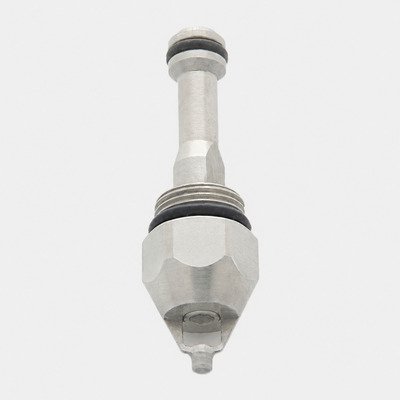
Applications
Existing Ventura product content identifies material handling, transfer points, crushers, and stockpiles as relevant dust-control settings. Each installation must account for material behaviour, surrounding equipment, air movement, and the effect of added moisture.
Consider spray placement near the dust-generation zone without obstructing material flow or nearby equipment.
Review source geometry, ventilation, available utilities, and access for inspection and maintenance.
Account for exposed area, wind, material sensitivity to moisture, and changing operating conditions.
Product options
Ventura’s existing dust-suppression range presents three approaches. The appropriate option depends on process conditions and the required spray behaviour.
A water-only fine spray approach. Droplet behaviour, available pressure, placement, drift, and water quality remain key considerations.
A fine-mist approach used with an appropriate process additive. Chemical compatibility and the site’s approved process requirements must be confirmed.
An air-and-water atomizing approach where both utilities and the resulting fine spray can be supported by the application.
Selection considerations
Dust control is application-specific. A nozzle should not be selected from spray angle alone.
Relevant resources
Typical environments
Applications may include transfer points, crushers, screens, stockpiles, loading or unloading, and enclosed or exposed handling areas. A responsible review considers the actual dust source, material trajectory, air movement, utility quality, water-addition limit, and maintenance conditions.
Abrasive material, outdoor exposure, water constraints, vibration, and difficult access can shape equipment choice.
Heat, scale, harsh exposure, moving material, ventilation, and surrounding machinery may affect placement and protection.
Material response to moisture, contamination limits, dust characteristics, enclosure, and process variability must be established.
Application limits
Provide water chemistry, treatment additives, temperature, abrasive solids, airborne chemicals, and outdoor exposure. Review bodies, internals, seals, strainers, piping, and mounting—not only the nozzle material.
Confirm the complete exposure—including concentration, contaminants, cleaning media, temperature, and seals—for the specific item.
Dust-control performance is site-specific. Droplet behaviour, placement, enclosure, wind or ventilation, source containment, water addition, controls, and maintenance must be considered together; fine droplets are not automatically the best choice.
Catalogue data is a selection input, not a guarantee of results in an unverified system.
Technical downloads
These files are present in the current website project. Confirm that the chosen series and document revision apply to the item being quoted.
Replacement and related applications
Common questions
The existing product content identifies water fine mist, chemical-aided fine mist, and dry fog using air and water.
Useful inputs include the material and dust behaviour, source location, process objective, available water and air, pressure and flow, wind or ventilation, temperature, water quality, placement limits, and maintenance access.
No. Fine droplets provide more surface area but are also more vulnerable to drift. Droplet behaviour, placement, material interaction, and site conditions must be considered together.
Quotation and specification request
Share what you know about the application. Unknown values can be left blank unless marked required.
Review certifications, compliance, and documentation guidance
Technical support
Share the process objective, liquid, flow, pressure, material requirements, and installation conditions you already know. We can help identify the product information to review.