

Washing and rinsing
Consider target coverage, spray impact, distance, nozzle spacing, and the way adjacent patterns overlap.
Industrial spray products
Compare nozzle families by the spray pattern, coverage, impact, flow, operating pressure, and material requirements of your process. Ventura Spray provides product information and application support for industrial spray selection.
Applications
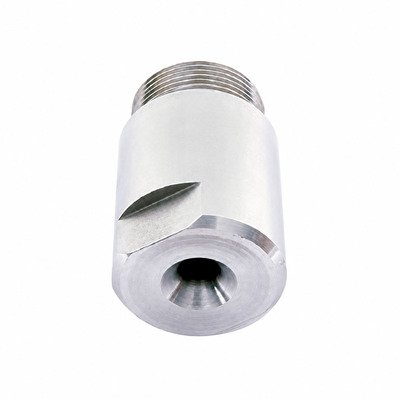
Industrial spray nozzles can support washing, rinsing, cooling, coating, dust control, gas scrubbing, humidification, chemical processing, and other liquid-distribution duties. The correct choice depends on the required result and the real conditions at the nozzle.
Consider target coverage, spray impact, distance, nozzle spacing, and the way adjacent patterns overlap.
Review flow distribution, droplet behaviour, available pressure, temperature, and the area or volume that must be reached.
Evaluate droplet behaviour, drift, liquid-to-gas contact, placement, and environmental conditions around the spray.
Product options
The existing Ventura Spray catalogue includes broad pattern families and specialized nozzle configurations. Model-level performance should always be checked at the intended operating conditions.
Full cone nozzles distribute liquid across a circular footprint. Hollow cone nozzles form an annular pattern with comparatively less liquid in the centre.
Flat patterns create line-shaped coverage suited to single-nozzle duties and manifolds. Flooding styles provide another broad-coverage option.
Fine sprays can increase liquid surface area but may be more affected by air movement and drift.
A concentrated solid stream is considered where point impact is more important than broad coverage.
Alternative internal geometries and free passages may be relevant where capacity or clogging resistance is a concern.
The catalogue also covers clip-on, steel-mill, fire-fighting, oil-burner, and sand-filter nozzle categories.
Selection considerations
Use measured process conditions where possible. Catalogue data for water may not represent a different liquid without adjustment or application review.
Application limits
Nozzle bodies and internal parts may be offered in different materials by series. Do not infer grade or suitability from appearance; state the fluid, concentration, temperature, environment, and required material.
Confirm the complete exposure—including concentration, contaminants, cleaning media, temperature, and seals—for the specific item.
Confirm flow and pressure at the nozzle, spray distance, angle, overlap, liquid properties, free passage, filtration, and duty cycle. Wear or clogging can change capacity and pattern.
Catalogue data is a selection input, not a guarantee of results in an unverified system.
Technical downloads
These files are present in the current website project. Confirm that the chosen series and document revision apply to the item being quoted.
Replacement and related applications
Common questions
Start with the process objective and required liquid distribution. Full cone patterns cover a circular area, hollow cone patterns concentrate liquid around the perimeter, flat sprays form a line-shaped pattern, and straight jets focus liquid at a point.
Useful inputs include the application, liquid, required flow, pressure at the nozzle, spray angle or target dimensions, spray distance, material requirements, temperature, connection, and any filtration or clogging concerns.
No. Pressure affects flow, spray angle, impact, and atomization, but excessive pressure can also increase misting, energy use, and wear. Selection should use the intended operating point.
Quotation and specification request
Share what you know about the application. Unknown values can be left blank unless marked required.
Review certifications, compliance, and documentation guidance
Technical support
Share the process objective, liquid, flow, pressure, material requirements, and installation conditions you already know. We can help identify the product information to review.